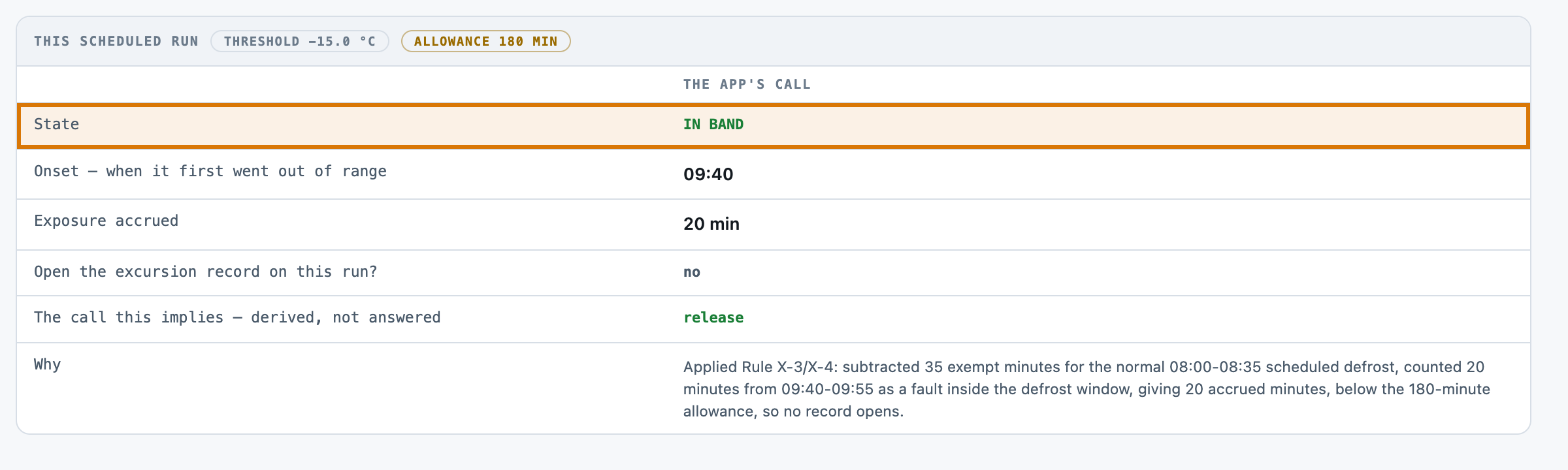
COUNTED111 · 89 · 111 / 120state accuracy pct — readings, with the carried stateDecided by == against a fixed gold value. No model graded this and it reproduces to the digit — which makes it checkable, not necessarily right: it is only as good as the gold behind it.
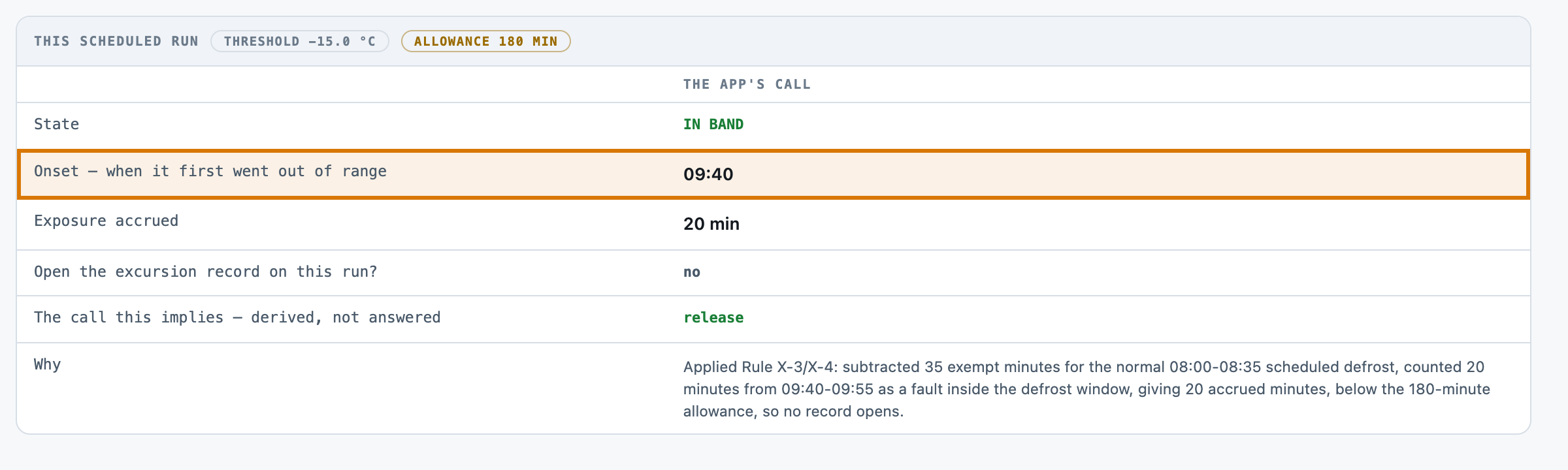
COUNTED115 · 72 · 113 · 87 · 41 / 120excursion onset accuracy pct — readings, exact HH:MM match, with the carried stateDecided by == against a fixed gold value. No model graded this and it reproduces to the digit — which makes it checkable, not necessarily right: it is only as good as the gold behind it.
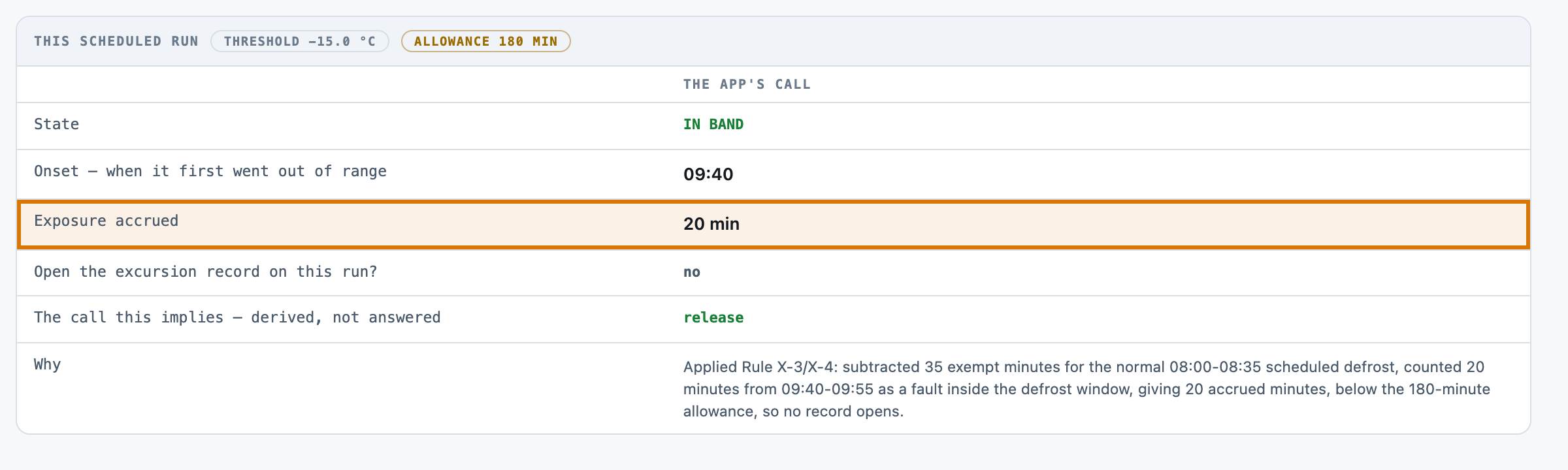
COUNTED115 · 76 / 120exposure minutes accuracy pct — readings, exact 5-minute match, with the carried stateDecided by == against a fixed gold value. No model graded this and it reproduces to the digit — which makes it checkable, not necessarily right: it is only as good as the gold behind it.
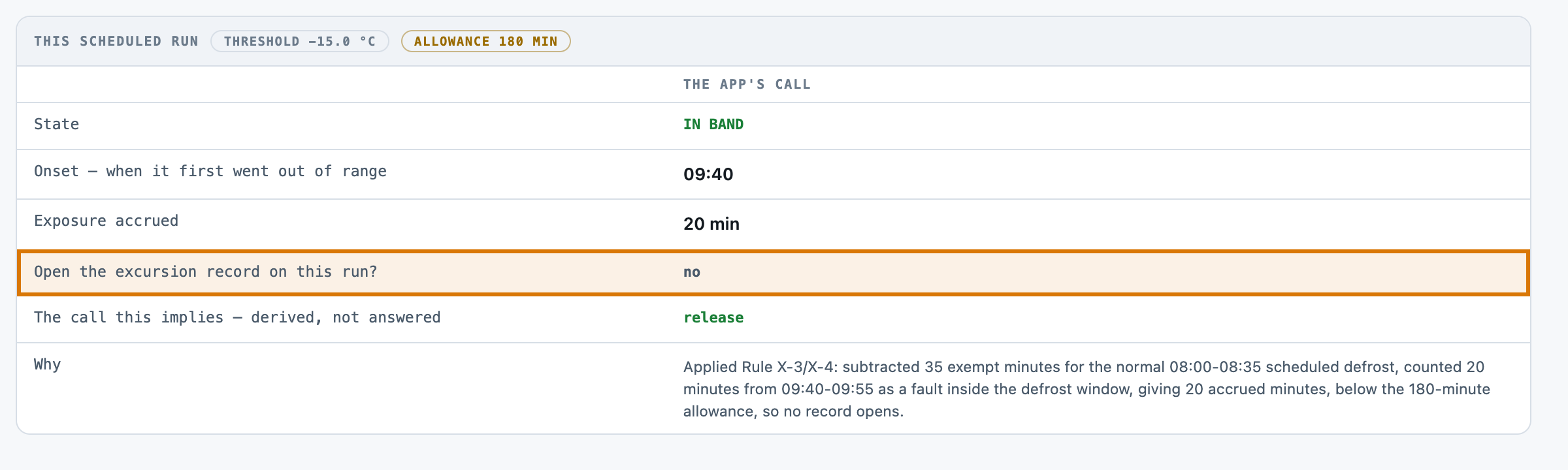
COUNTED119 · 105 / 120open record accuracy pct — readings, with the carried stateDecided by == against a fixed gold value. No model graded this and it reproduces to the digit — which makes it checkable, not necessarily right: it is only as good as the gold behind it.
COUNTED43 · 0 / 46onset offpage accuracy pct — readings whose correct onset is NOT on their own page, with the carried stateDecided by == against a fixed gold value. No model graded this and it reproduces to the digit — which makes it checkable, not necessarily right: it is only as good as the gold behind it.
COUNTED4 · 54 / 120onset late — readings — onset reported LATE, the UNSAFE direction, with the carried stateDecided by == against a fixed gold value. No model graded this and it reproduces to the digit — which makes it checkable, not necessarily right: it is only as good as the gold behind it.
COUNTED1140 · 8964 / 120onset late minutes total — readings — total MINUTES of late onset, the UNSAFE direction, with the carried stateDecided by == against a fixed gold value. No model graded this and it reproduces to the digit — which makes it checkable, not necessarily right: it is only as good as the gold behind it.
COUNTED2 · 2 / 120onset early — readings — onset reported EARLY, the wasteful direction, with the carried stateDecided by == against a fixed gold value. No model graded this and it reproduces to the digit — which makes it checkable, not necessarily right: it is only as good as the gold behind it.
COUNTED66 · 180 / 120onset early minutes total — readings — total MINUTES of early onset, the wasteful direction, with the carried stateDecided by == against a fixed gold value. No model graded this and it reproduces to the digit — which makes it checkable, not necessarily right: it is only as good as the gold behind it.
COUNTED0 · 6 / 18missed record pct — readings whose correct answer is to OPEN the excursion record, with the carried stateDecided by == against a fixed gold value. No model graded this and it reproduces to the digit — which makes it checkable, not necessarily right: it is only as good as the gold behind it.
COUNTED100 · 8 / 102duplicate record rate pct — readings that must NOT open a record, with the carried stateDecided by == against a fixed gold value. No model graded this and it reproduces to the digit — which makes it checkable, not necessarily right: it is only as good as the gold behind it.
COUNTED110 · 93 / 111disposition accuracy pct — readings with an allowance on file — disposition DERIVED from the exposure reported, with the carried stateDecided by == against a fixed gold value. No model graded this and it reproduces to the digit — which makes it checkable, not necessarily right: it is only as good as the gold behind it.
COUNTED111 · 19 / 111unsafe dispositions — readings with an allowance on file — said RELEASE where the key says DISCARD, with the carried stateDecided by == against a fixed gold value. No model graded this and it reproduces to the digit — which makes it checkable, not necessarily right: it is only as good as the gold behind it.
COUNTED0 · 0 / 111wasteful dispositions — readings with an allowance on file — said DISCARD where the key says RELEASE, with the carried stateDecided by == against a fixed gold value. No model graded this and it reproduces to the digit — which makes it checkable, not necessarily right: it is only as good as the gold behind it.
COUNTED50 · 30 / 54memory state accuracy pct — readings whose answer is NOT derivable from their own snapshot, with the carried stateDecided by == against a fixed gold value. No model graded this and it reproduces to the digit — which makes it checkable, not necessarily right: it is only as good as the gold behind it.
COUNTED51 · 7 / 54memory onset accuracy pct — readings whose answer is NOT derivable from their own snapshot, with the carried stateDecided by == against a fixed gold value. No model graded this and it reproduces to the digit — which makes it checkable, not necessarily right: it is only as good as the gold behind it.
COUNTED51 · 12 / 54memory exposure accuracy pct — readings whose answer is NOT derivable from their own snapshot, with the carried stateDecided by == against a fixed gold value. No model graded this and it reproduces to the digit — which makes it checkable, not necessarily right: it is only as good as the gold behind it.
COUNTED18 · 18 / 18context incomplete recall pct — readings with no specification on file or a probe gap — THE GUARDRAIL, with the carried stateDecided by == against a fixed gold value. No model graded this and it reproduces to the digit — which makes it checkable, not necessarily right: it is only as good as the gold behind it.
COUNTED4 · 54 / 120exposure minutes error pct — readings — total accrued minutes reported against the key, with the carried stateDecided by == against a fixed gold value. No model graded this and it reproduces to the digit — which makes it checkable, not necessarily right: it is only as good as the gold behind it.
COUNTED120 · 119 / 120answered pct — calls, with the carried stateDecided by == against a fixed gold value. No model graded this and it reproduces to the digit — which makes it checkable, not necessarily right: it is only as good as the gold behind it.
COUNTED0 · 120 / 120unparsed replies — calls, with the carried stateDecided by == against a fixed gold value. No model graded this and it reproduces to the digit — which makes it checkable, not necessarily right: it is only as good as the gold behind it.
NOT YET KNOWN—A person confirmed the gold is rightThe grader is == and needs no confirming. The gold does: it is machine-derived from the registry's structured modules, and every rate on this page rests on that derivation being faithful to what the prose actually says. Nobody has read a document against its gold record by hand.