Why it matters
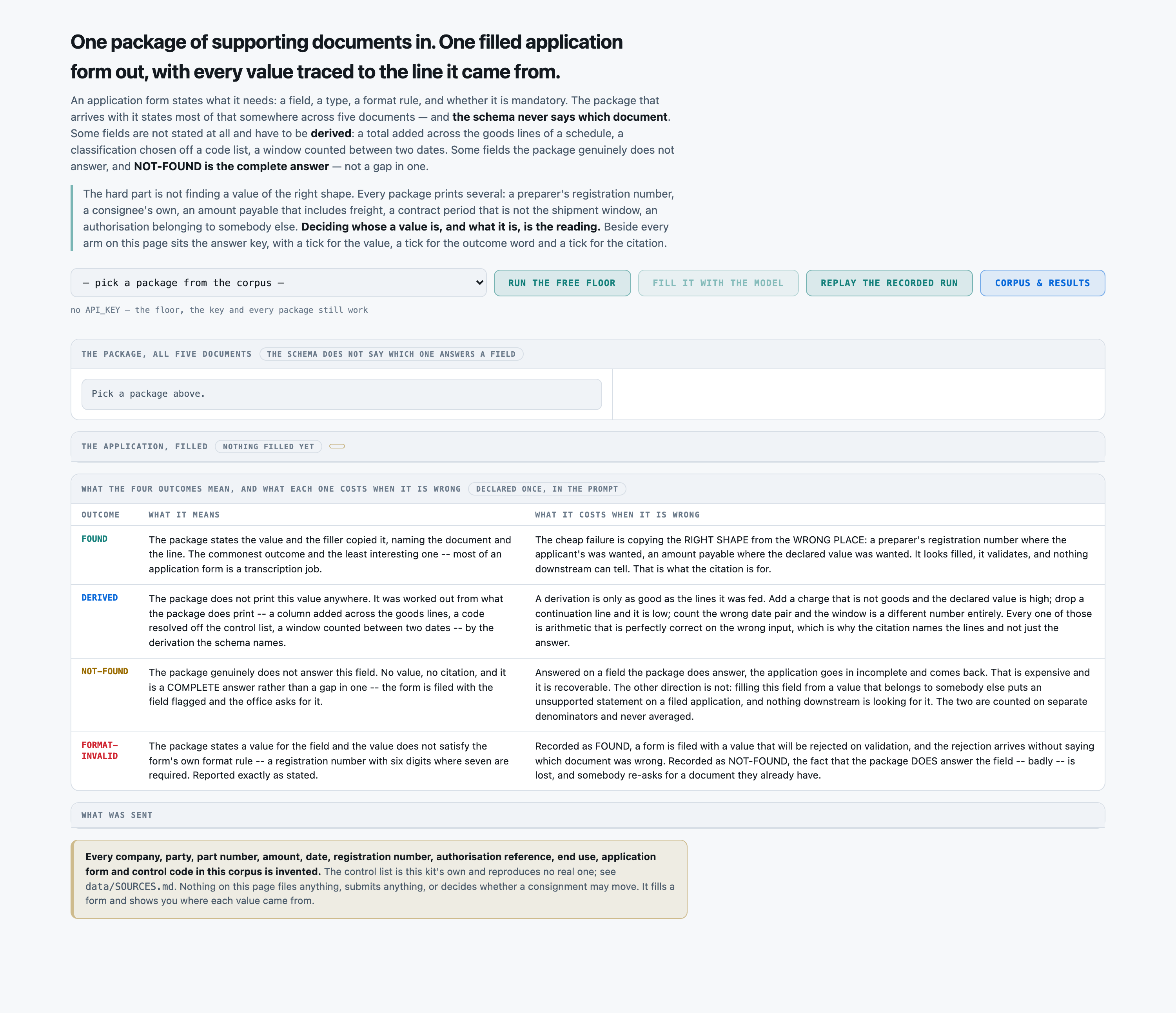
Today's manual process, and the same job with the app
An export compliance desk at an aerospace parts exporter, filing licence applications for shipments abroad.
✕Today's manual process
1Open every document and work out which one answers each of the fourteen fields.
2Copy each value across telling a preparer's number from the applicant's, and a payable amount from the declared value.
3Total the schedule and count the days manually, re-adding the goods lines and the shipment window.
4Miss one wrong line and the filed form carries a value no document really supports.
Every package read field by field
✓With the app
1Every document is read and each field is matched to the one line that actually answers it.
2Each value is filled in with the document and the line it came from shown beside it.
3Totals and windows are worked out from the same lines, with the arithmetic shown.
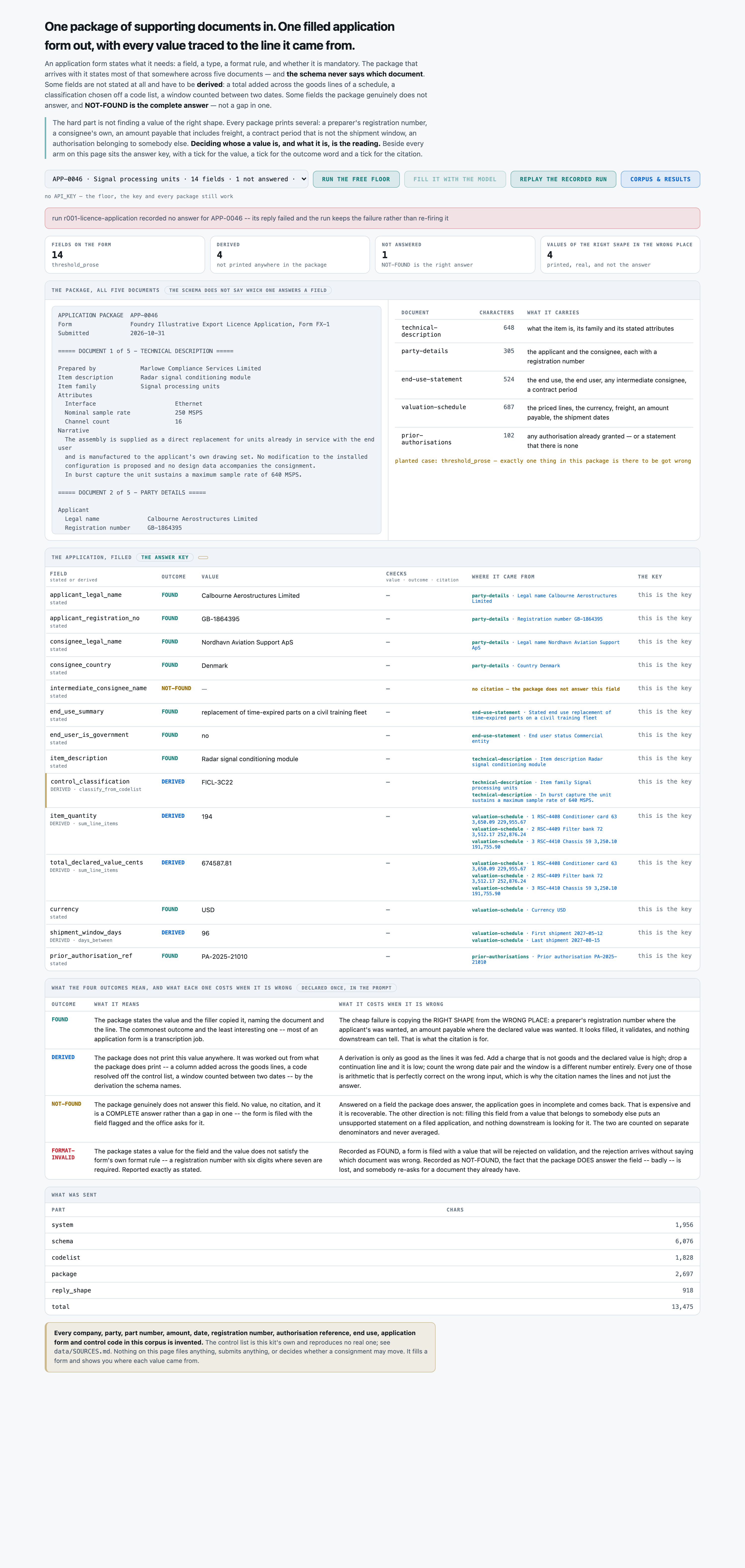
4A field the package doesn't answer is marked open, not guessed, so the question goes back before the form is filed.
Every value arrives with its source
See it work
One real case: what the app found, step by step
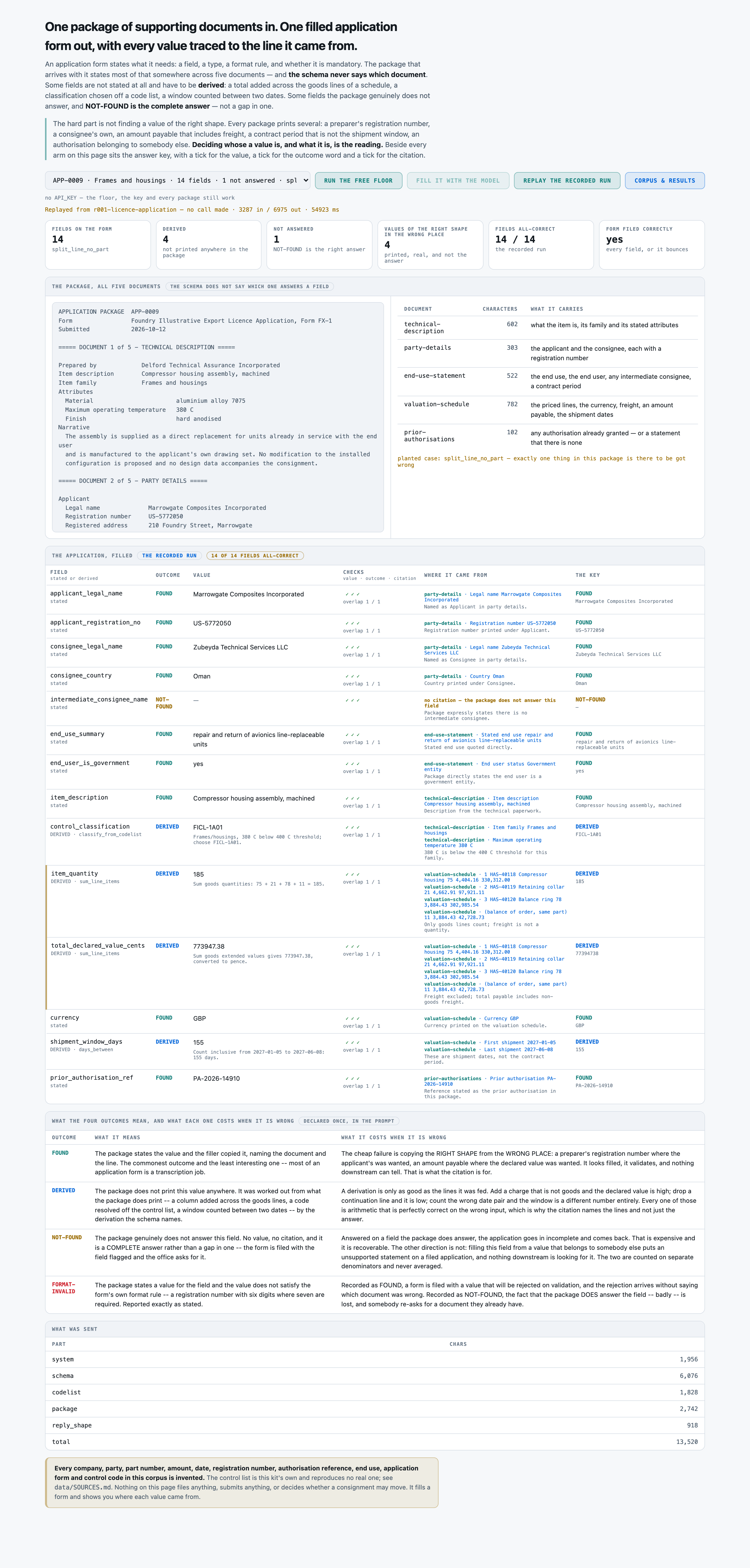
A compressor housing shipment to Oman, with fourteen fields filled from five documents in the package.
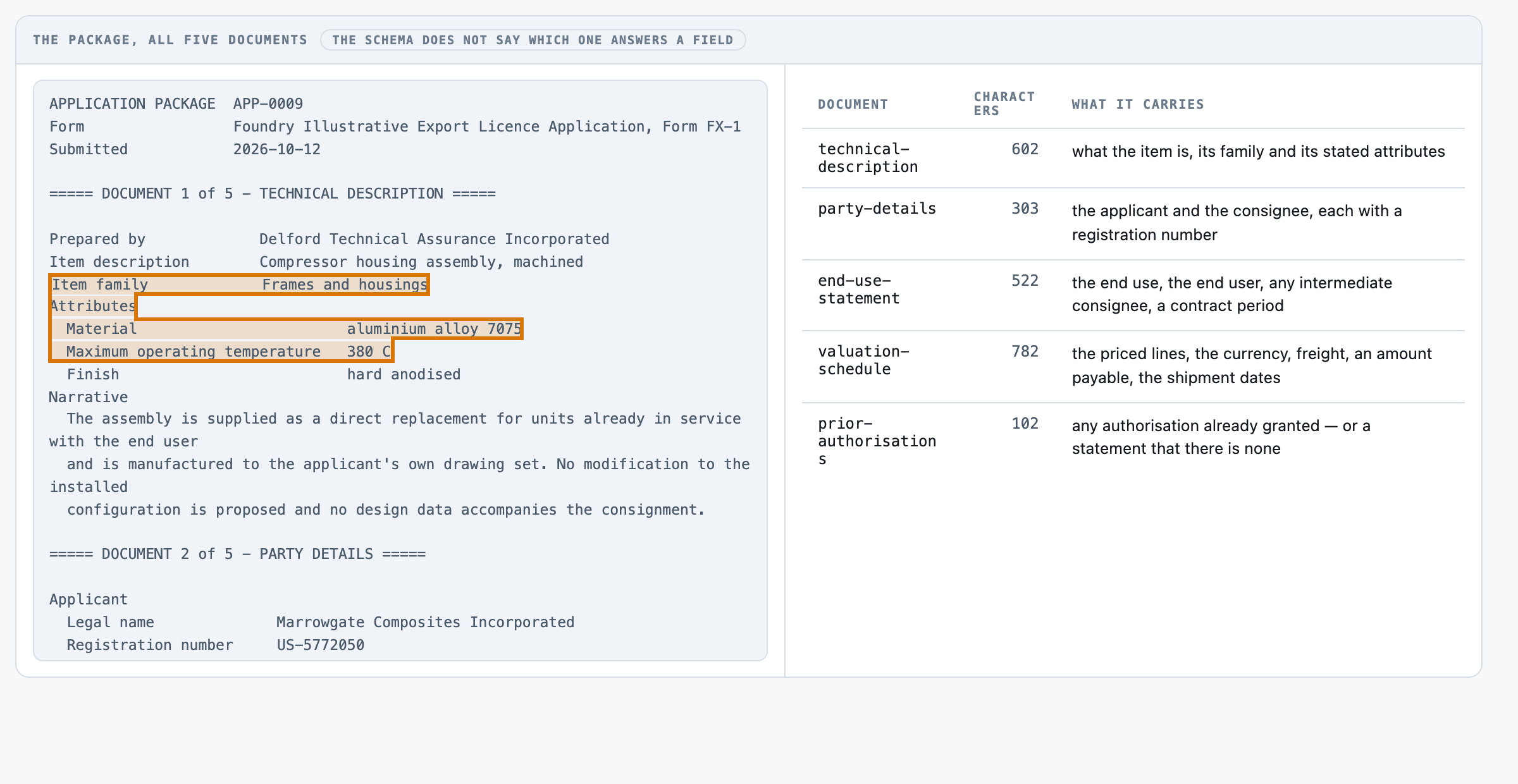
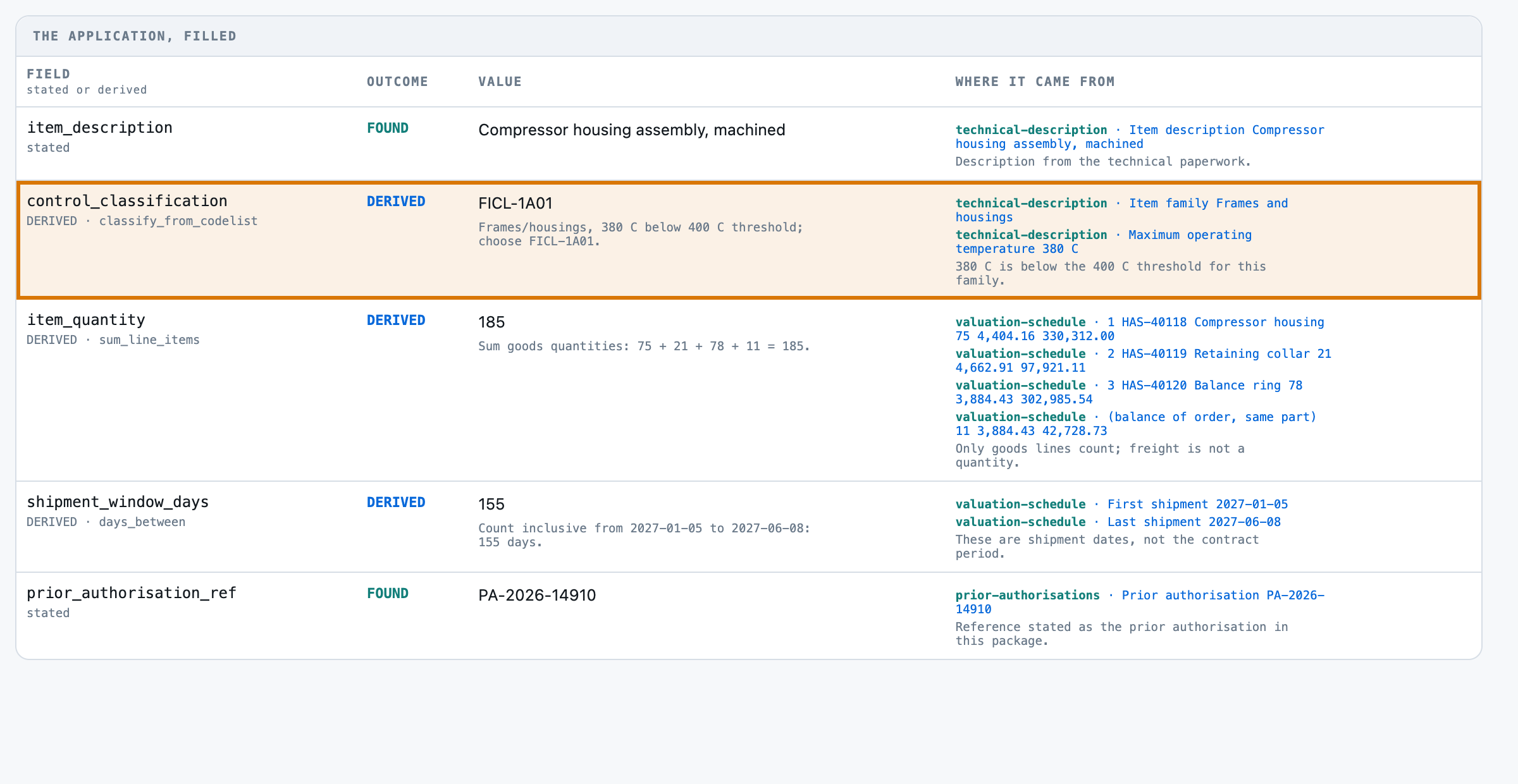
- 1The technical paperwork material, item family and the operating temperature, exactly as filed.
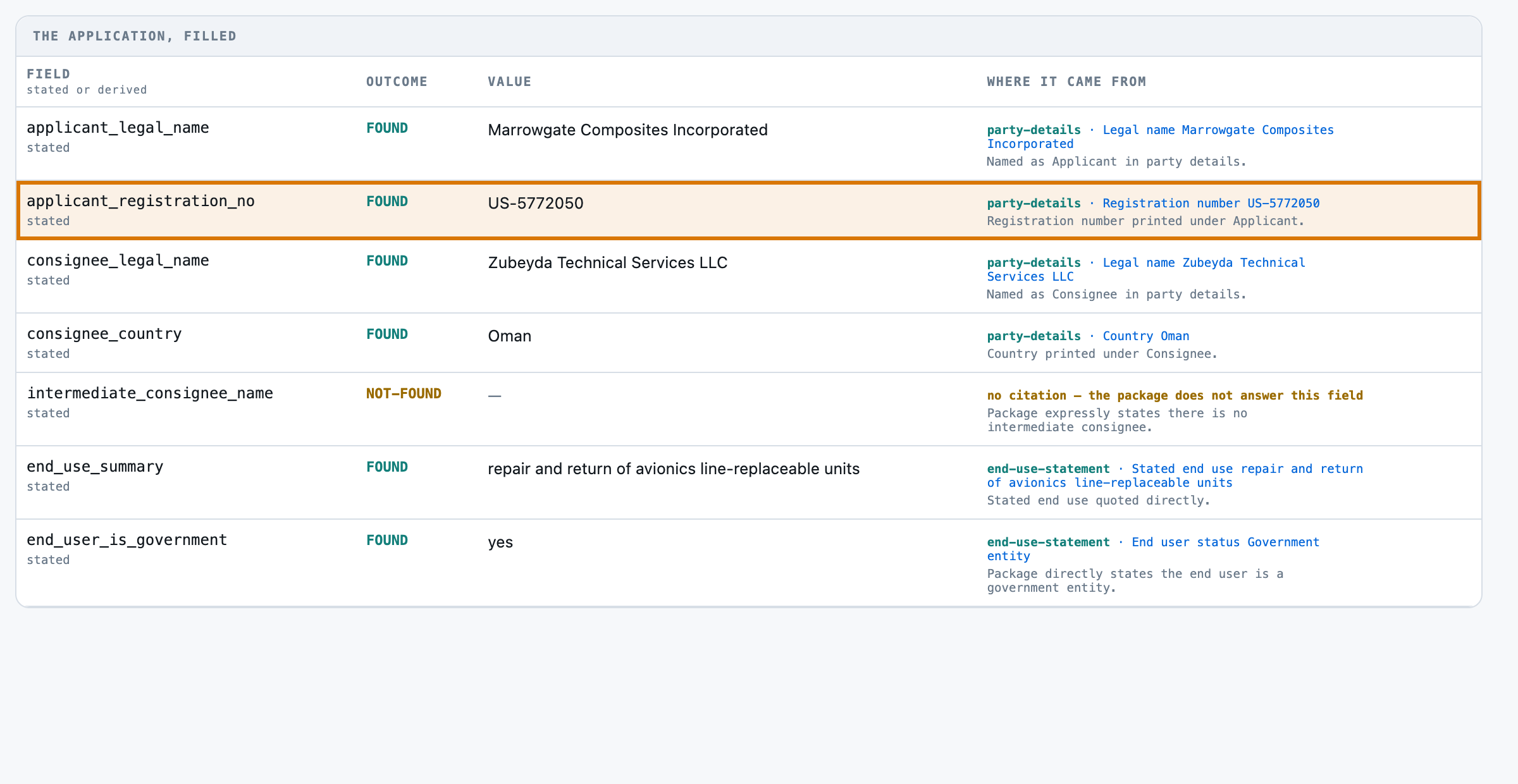
- 2The applicant, exactly as printed a registration number copied from the package, not guessed.
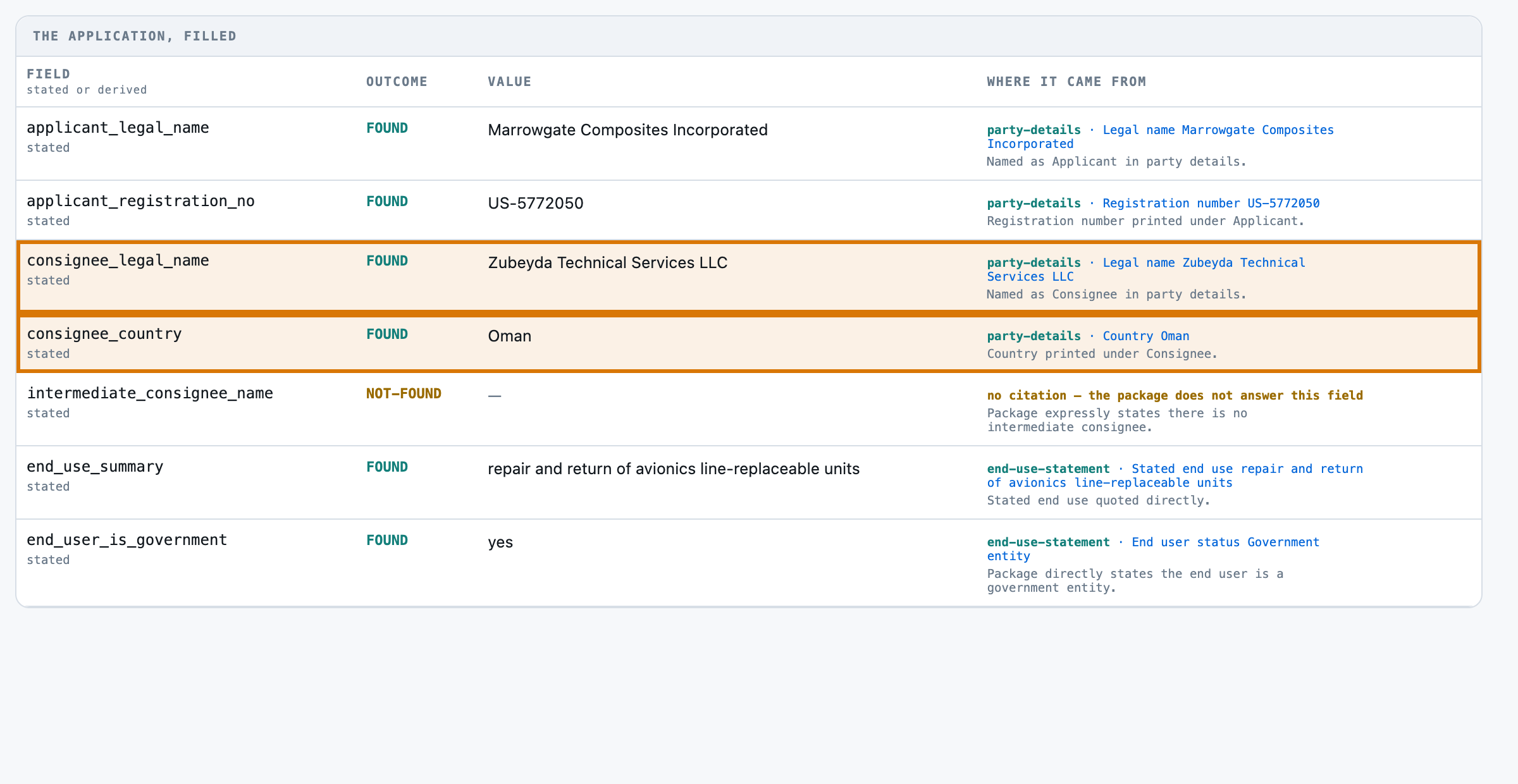
- 3The consignee, on the same page a different company, a different country, read from the same document.
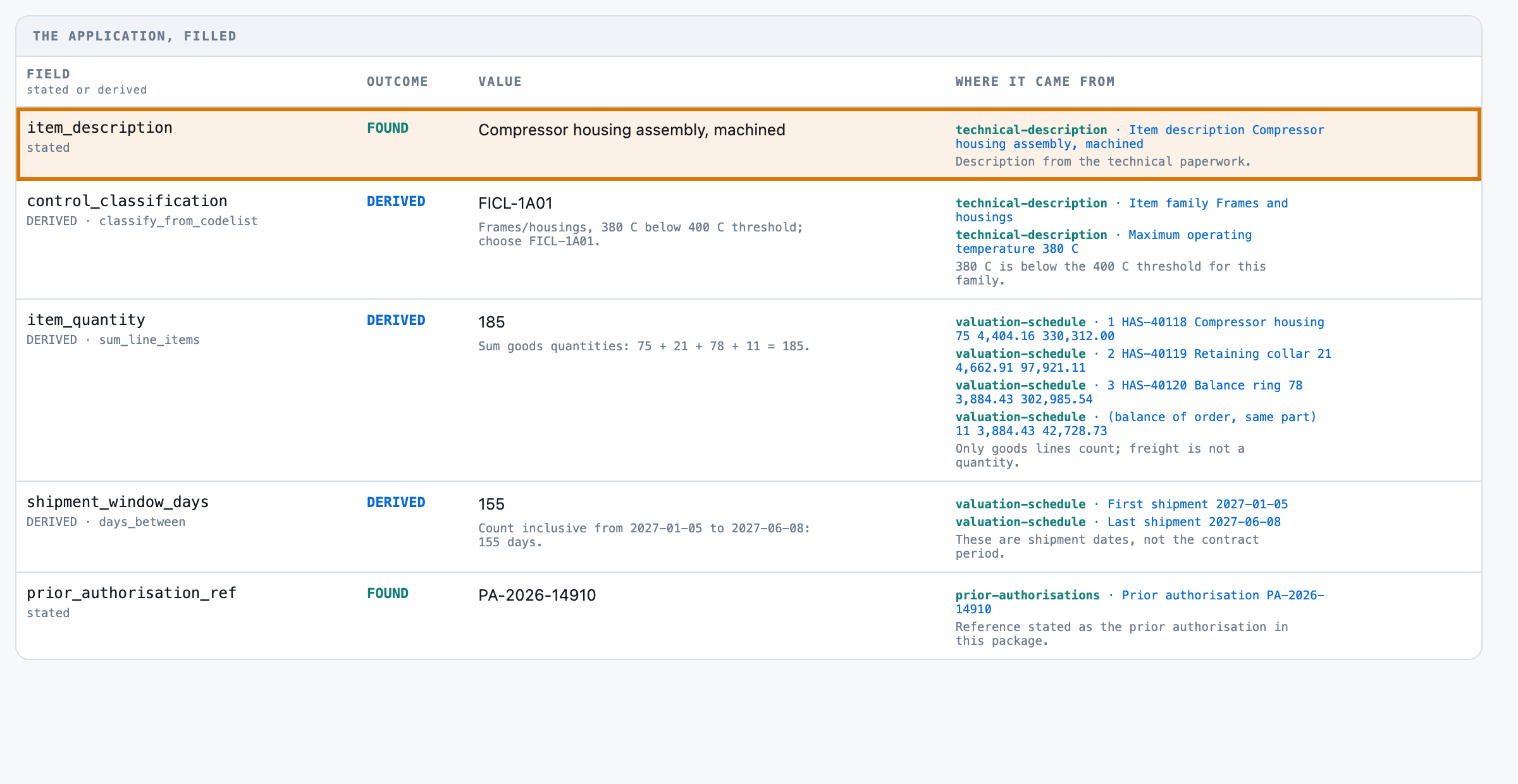
- 4The item itself described in the technical paperwork, word for word.
- 5The code it's filed under worked out from the material family and its temperature, with the reasoning shown.
For engineers
How it is built, and how we measured it
All fourteen steps of the build are written up, from the business case to running it in your own environment.
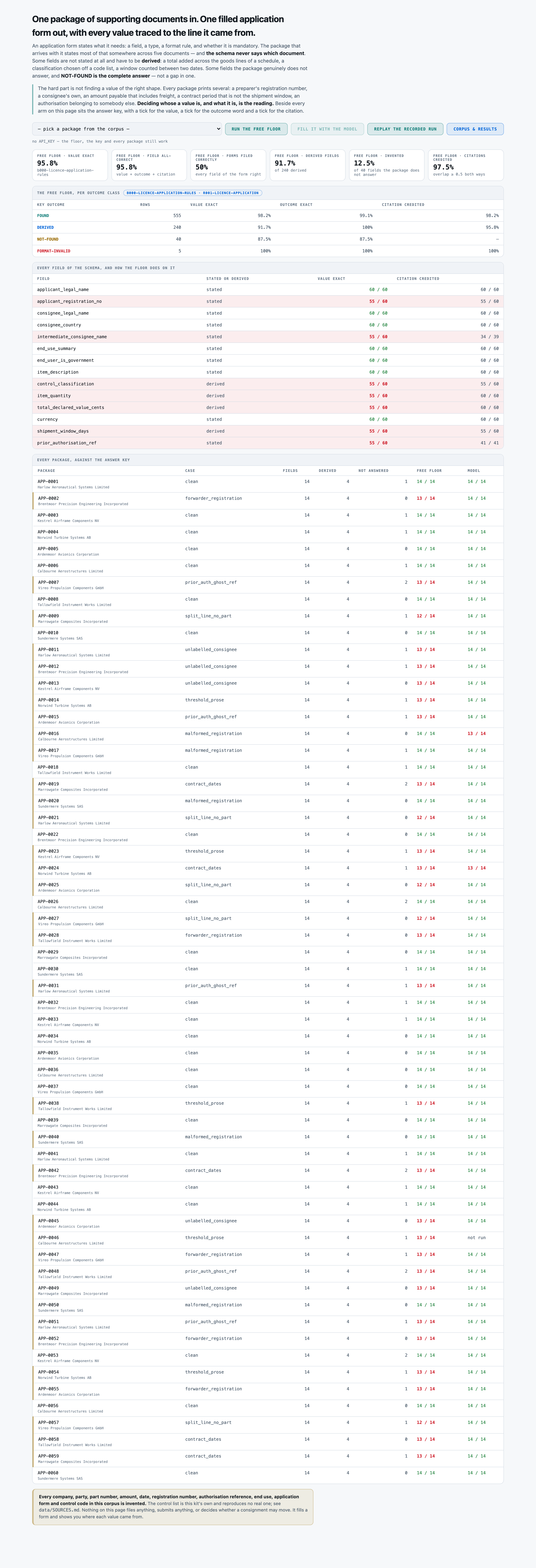
57 of 60applications filed completely rightmeasured in 06 Evals →
826 of 840field values exactly rightmeasured in 06 Evals →
0 of 40fields filled from someone else's valuemeasured in 06 Evals →
4.2¢to fill one applicationmeasured in 07 Unit cost →
The build, step by step
14 steps06 Evals · the graders
Make it yours
What you see is a reference app. We shape it to how you work.
Every part of it is built to change, and none of it means starting over.
Your rulesYour own schema: which fields are mandatory, their formats, and the thresholds a rule depends on.
Your recordsThe documents your own applicants and preparers actually submit, in the formats you already receive them.
Your systemsReads from wherever your packages arrive; filled applications post to your own filing system.
Your screensThe field names, the order and the wording your own filing desk already uses.
Want this for your team?
Talk to us
We can run this on your own packages and forms, inside your environment.
Talk to us →