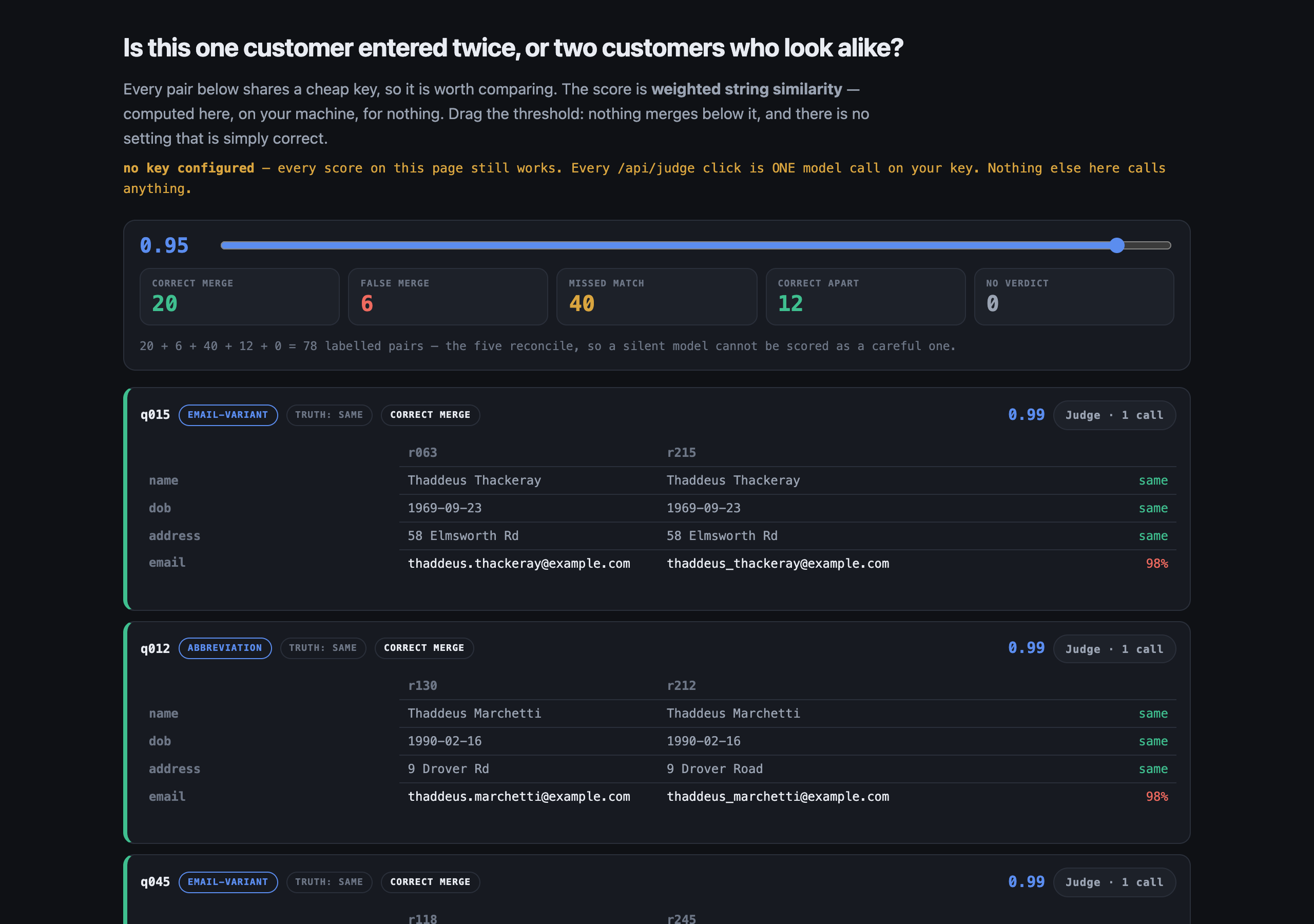
Why it matters
Today's manual process, and the same job with the app
A customer records team at an insurer, cleaning a policyholder list that people typed in over the years.
✕Today's manual process
1Pull likely repeats into a spreadsheet: same surname, same birth date, same street.
2Compare each pair field by field: Rd or Road, a dot or an underscore in an email.
3Merge on a rule someone set once, and nobody has checked since.
4One wrong merge fuses two real people, and their history cannot be restored.
Every pair compared manually in a spreadsheet
✓With the app
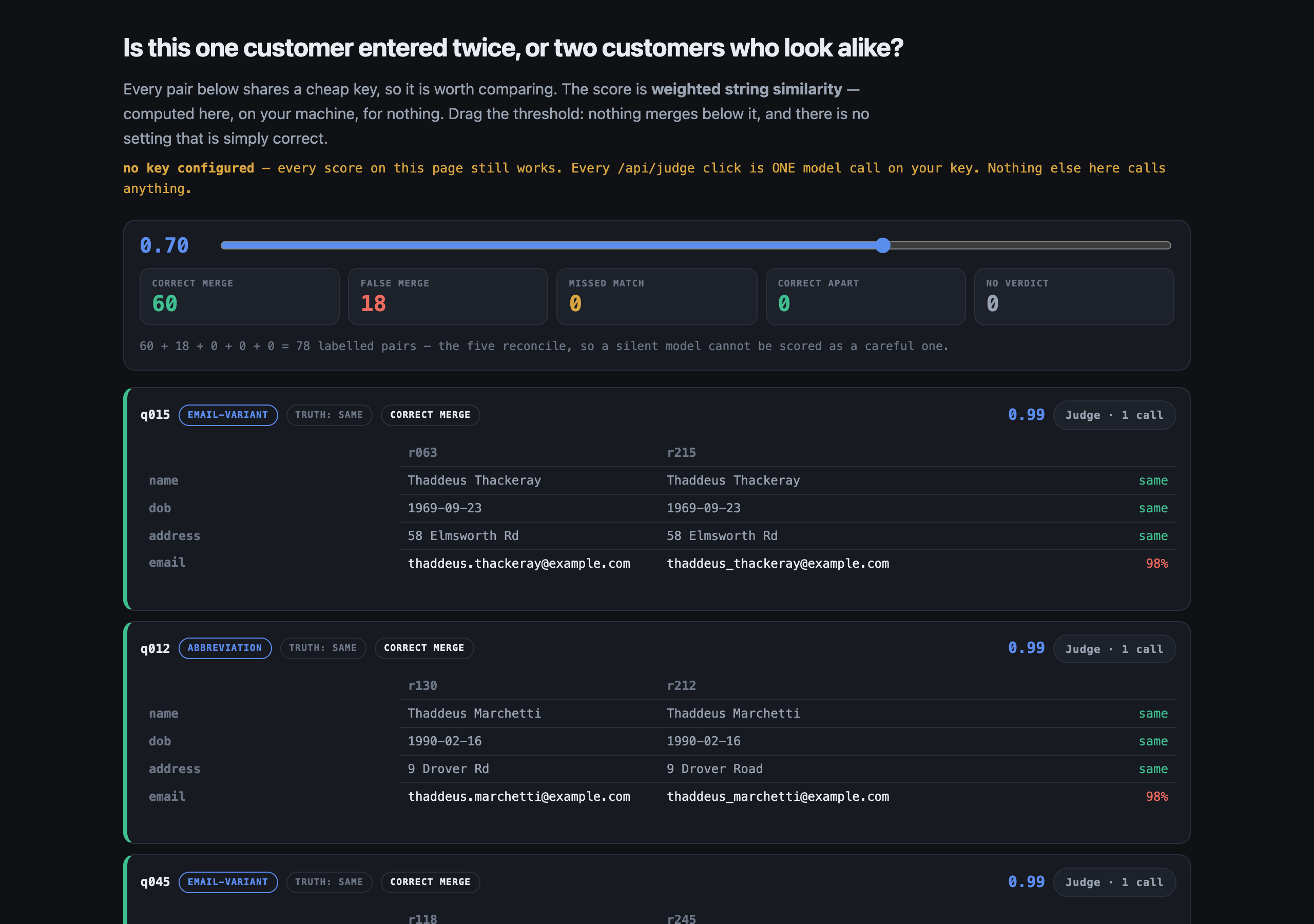
1Likely pairs come forward, with name, birth date, address and email side by side.
2Every field is scored, and each pair gets a verdict: same person, different people, or unsure.
3You set how alike is enough, and the merge and miss counts change as you drag.
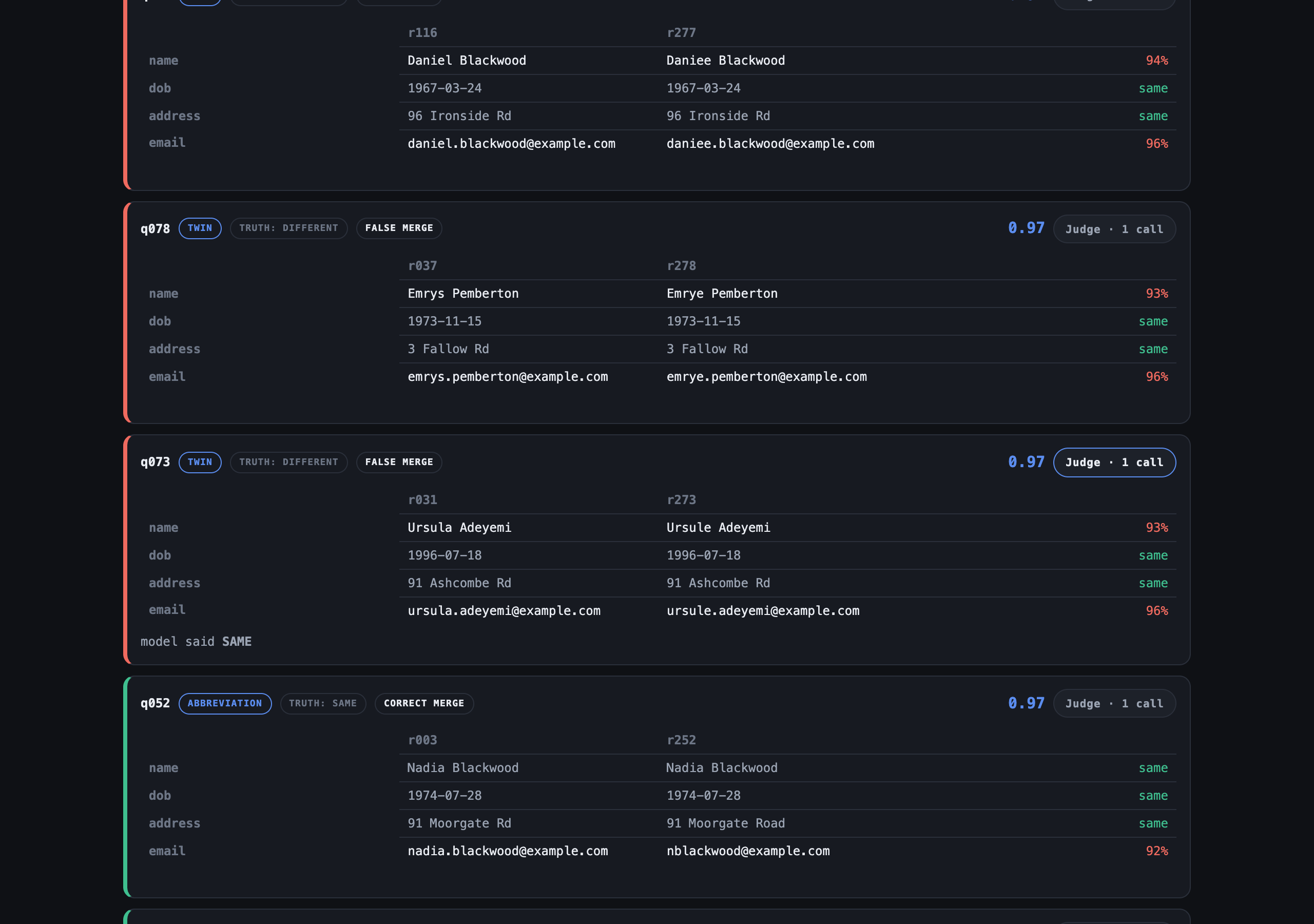
4Relatives are kept apart, but twins at one address still need a person's eye.
Each pair judged in about two seconds
See it work
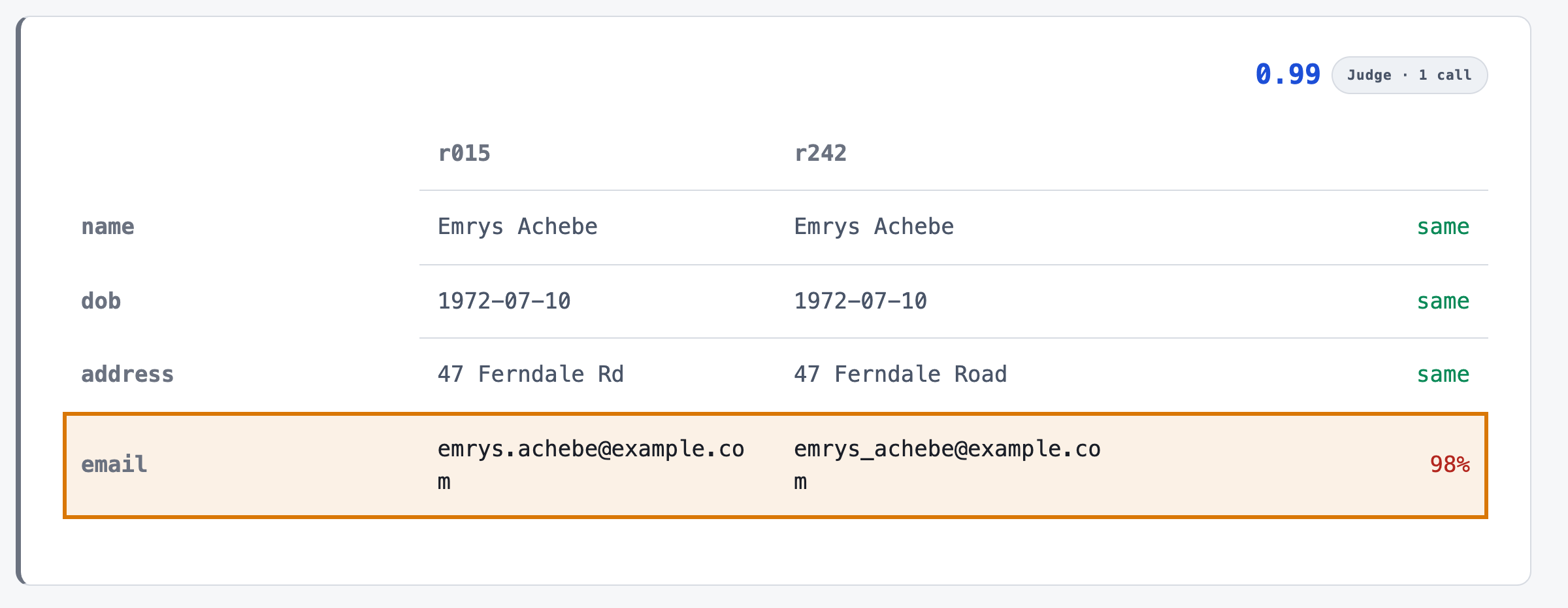
Two real pairs of customer records, compared field by field
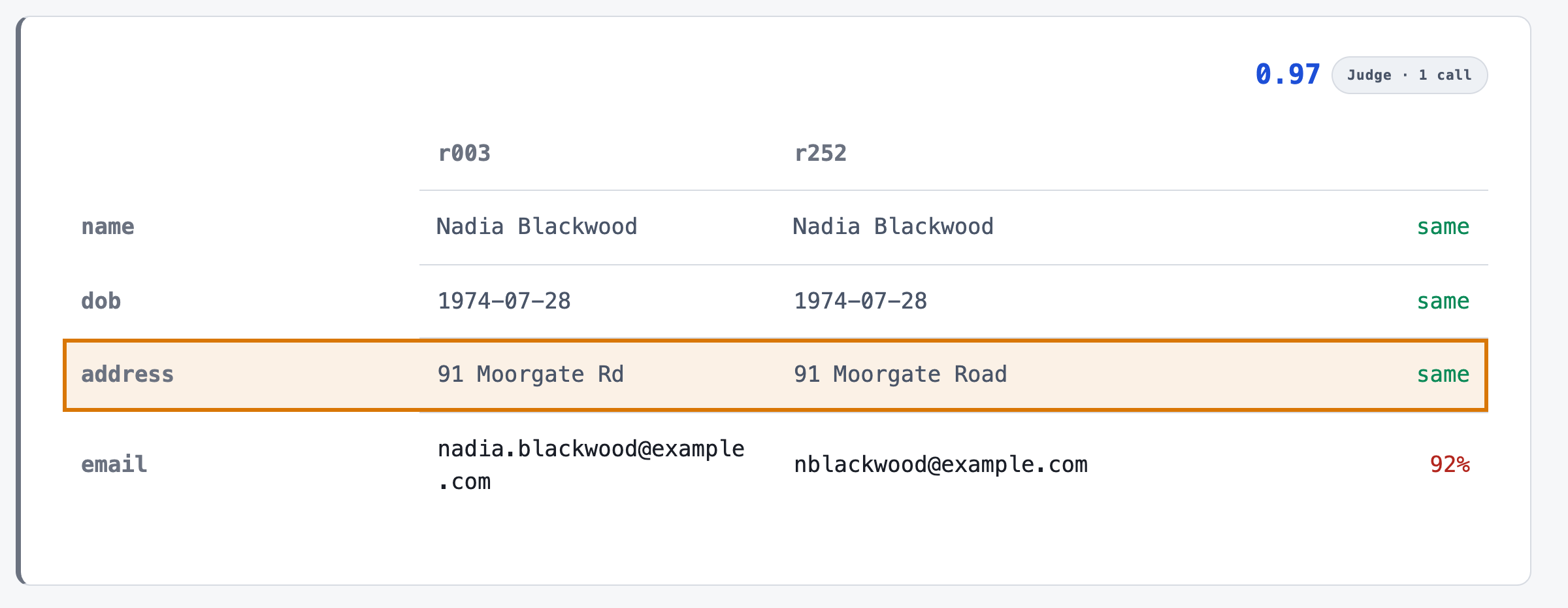
Nadia Blackwood is on the list twice: once at 91 Moorgate Rd, once at 91 Moorgate Road, with two different emails.
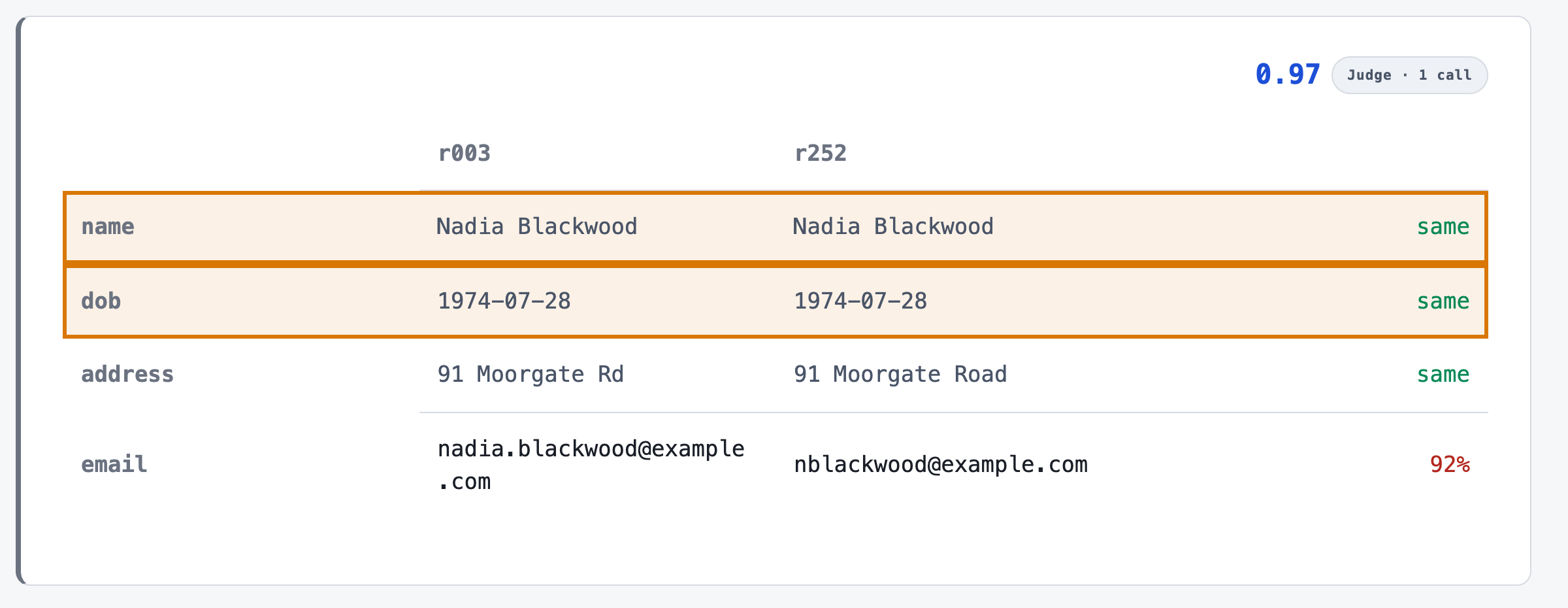
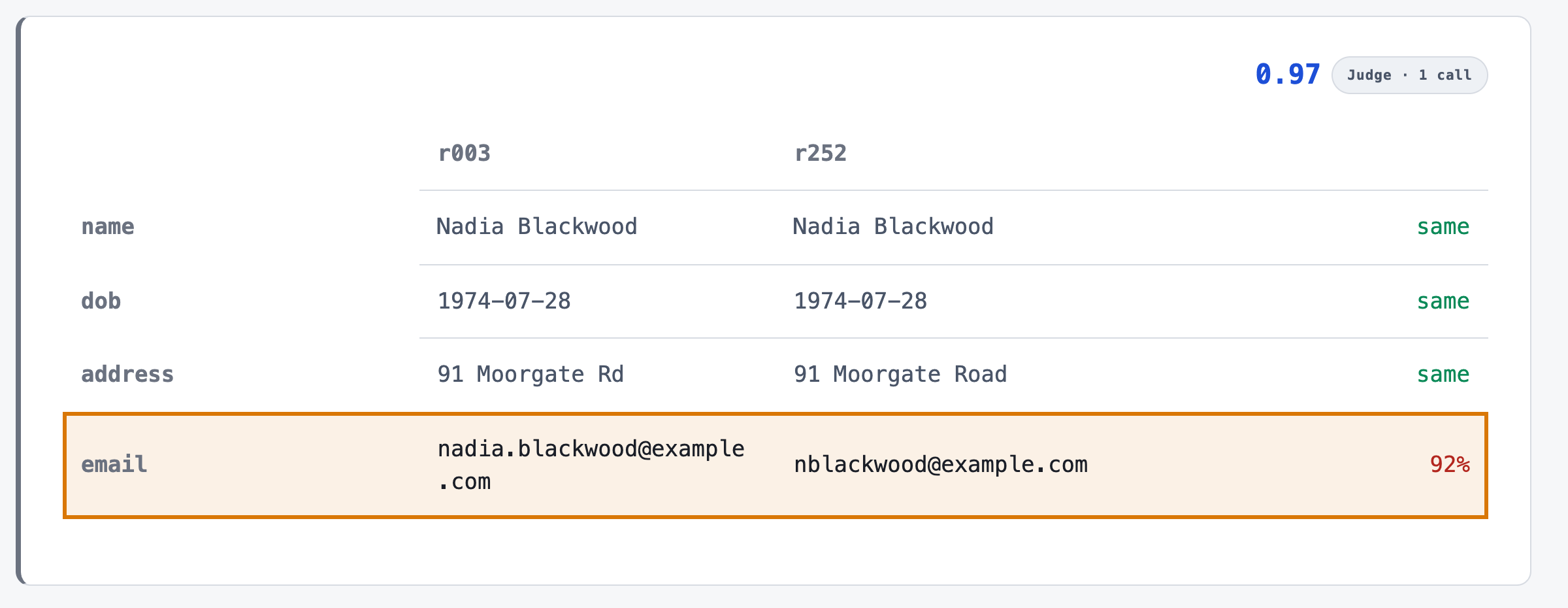
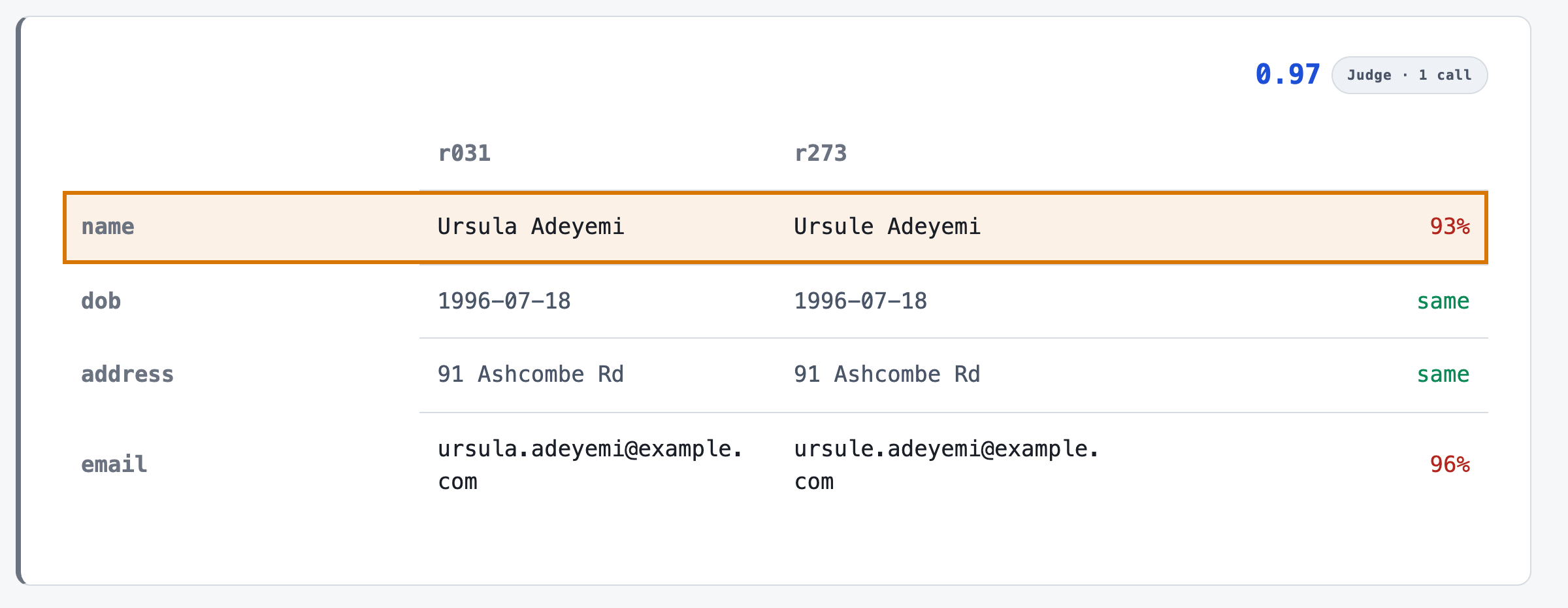
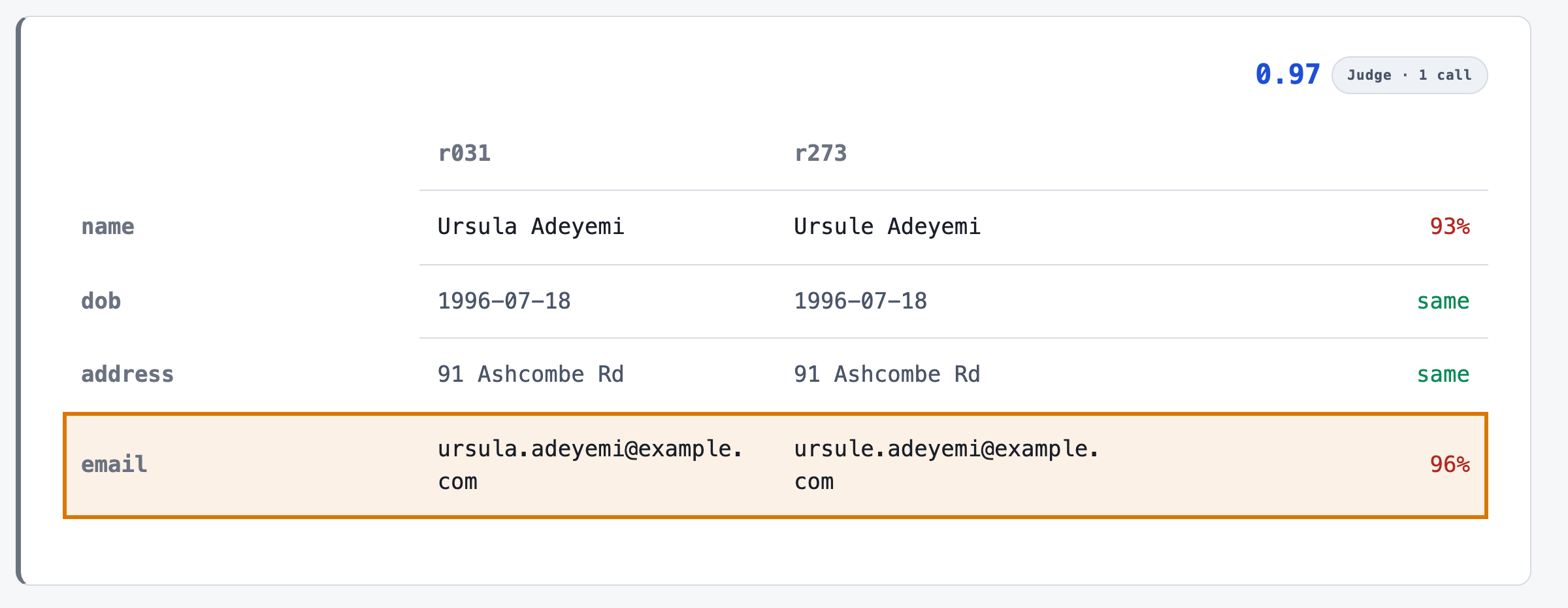
- 1The two records one customer entered twice, with the same name and birth date.
- 2Rd and Road the app counts the two addresses as the same.
- 3The emails spelled differently, and still scored 92% alike.
- 4Twins, not one customer one letter apart in the name, same birth date and address.
- 5Close on every field the emails are 96% alike too. Twins like these still need a person's check.
For engineers
How it is built, and how we measured it
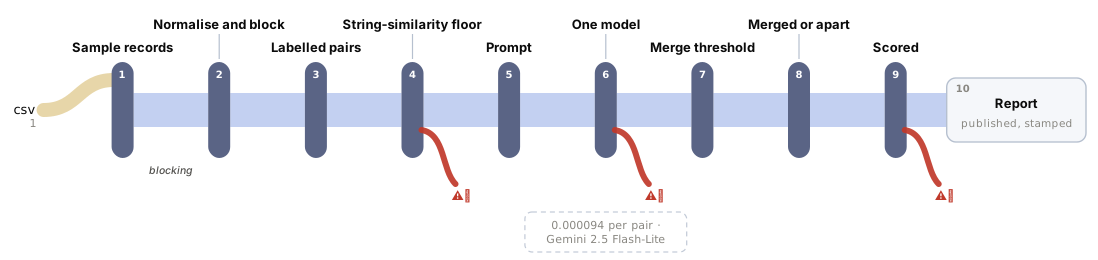
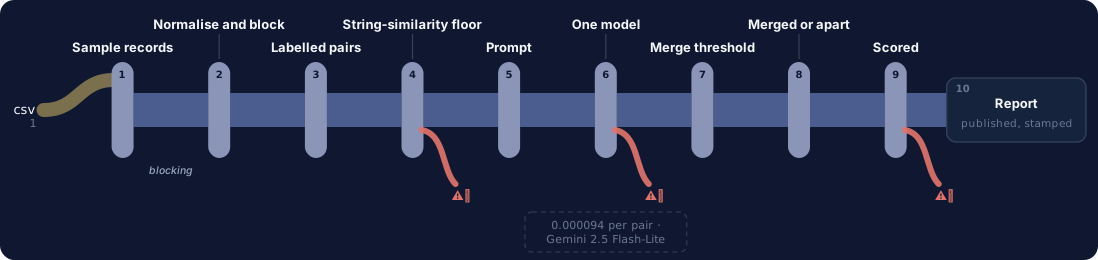
All fourteen steps of the build are written up, from the business case to running it in your own environment.
90%of merges were truly one personmeasured in 01 Business case →
12 of 12relatives at one address kept apartmeasured in 01 Business case →
6pairs of twins wrongly mergedmeasured in 01 Business case →
0.7¢to check all 78 pairsmeasured in 07 Unit cost →
The build, step by step
14 steps06 Evals · the graders
Make it yours
What you see is a reference app. We shape it to how you work.
Every part of it is built to change, and none of it means starting over.
Your rulesHow alike is enough to merge, and which fields must agree first.
Your recordsYour own customer, claimant or policyholder list, as you export it today.
Your systemsPairs read from your policy system, and merge decisions sent back to it.
Your screensThe fields, wording and layout your records team already works with.
Want this for your team?
Talk to us
We can run this on your own customer list, with your own merge rules, inside your environment.
Talk to us →